


Solar Eclipse Souvenirs: From Ephemera to Collectible Eclipse Artifact

Because they are rare, solar eclipses have inspired people to immortalize fragments of the moment. Some keep handwritten notes. Others collect posters, commemorative envelopes, stamps, postcards, t-shirts, or photographs from distant expeditions. These items are often simple and temporary, but they become valuable historical artifacts connected to one of the rarest experiences on Earth.

Today, eclipse tourism has grown into a global phenomenon. Travelers from around the world cross oceans or vast expanses of land to witness the brief few minutes of a total eclipse in places like Spain and Iceland (this year). Yet despite the scale of modern eclipse travel, many souvenirs still feel disposable: mass-produced t-shirts, generic mugs, and quickly forgotten merchandise. Even if they are still in high demand, they are still in high demand.
More and more eclipse enthusiasts are now seeking something rarer and more meaningful. These sought-after items not only advertise an event but also preserve its memory. This is where collectible eclipse artifacts began to redefine what constitutes a solar eclipse souvenir.
Posters announcing eclipse expeditions were displayed at observatories, universities, and scientific societies. Travelers carried postcards featuring maps of the path of totality. Newspapers published commemorative illustrations documenting the passage of the moon's shadow across remote landscapes.
These paper objects fall into a category often referred to as ephemera. These items were originally intended for temporary use but over time were preserved for their cultural or historical significance.
Today, eclipse ephemera have become a niche collectible. Vintage eclipse posters, first-day covers, and expedition materials now represent not only astronomical history, but also humanity's emotional connection to this rare celestial event.
A total solar eclipse is brief (only a few minutes), unpredictable, and profound. For many travelers, it is a once-in-a-lifetime experience associated with:
People don't just want proof of their visit; they want a physical memory of the sky itself.
This explains why many collectors are shifting from disposable merchandise to objects with deeper narrative value:
Eclipse artifacts don't need to be ancient to feel timeless. What matters is the intention:
Today, there is a renewed interest in analog astronomical instruments among collectors, educators, and eclipse enthusiasts. Their appeal lies in part in their tactile nature: spinning a disc, synchronizing celestial cycles, or manually tracing astronomical movements creates a more intimate connection with the sky.
This resurgence has inspired a new generation of eclipse-related collectibles that combine:
Rather than approaching eclipses solely as spectacle, the project explores how astronomical events can be transformed into meaningful physical objects, blending historical inspiration, educational value, and collectible design.
The eclipse instruments he used were influenced by:
Yet the human desire to preserve the experience remains constant. Year after year, it grows ever more intense and the desire for more is greater. That's why eclipse souvenirs continue to flourish in each country hosting an observation. They range from paper ephemera and commemorative envelopes to collectible astronomical artifacts designed for future generations.
In many stories, these objects are more than just reminders of a rare celestial event. These objects are reminders of humanity's enduring fascination with the sky, a practice that stretches back thousands of years.
And perhaps that's what makes eclipse souvenirs truly meaningful: not their price, not their rarity, but their ability to keep the memory of a total eclipse alive long after its shadow has disappeared.

Today, eclipse tourism has grown into a global phenomenon. Travelers from around the world cross oceans or vast expanses of land to witness the brief few minutes of a total eclipse in places like Spain and Iceland (this year). Yet despite the scale of modern eclipse travel, many souvenirs still feel disposable: mass-produced t-shirts, generic mugs, and quickly forgotten merchandise. Even if they are still in high demand, they are still in high demand.
More and more eclipse enthusiasts are now seeking something rarer and more meaningful. These sought-after items not only advertise an event but also preserve its memory. This is where collectible eclipse artifacts began to redefine what constitutes a solar eclipse souvenir.
The Long Tradition of Eclipse Souvenirs
The tradition of eclipse memorabilia has been around for over 100 years. In the late 19th and early 20th centuries, eclipse expeditions often produced printed mementos to commemorate their journeys. Special postmarks, known as eclipse stamps, became highly sought after by astronomy enthusiasts and philatelists from around the world.Posters announcing eclipse expeditions were displayed at observatories, universities, and scientific societies. Travelers carried postcards featuring maps of the path of totality. Newspapers published commemorative illustrations documenting the passage of the moon's shadow across remote landscapes.
These paper objects fall into a category often referred to as ephemera. These items were originally intended for temporary use but over time were preserved for their cultural or historical significance.
Today, eclipse ephemera have become a niche collectible. Vintage eclipse posters, first-day covers, and expedition materials now represent not only astronomical history, but also humanity's emotional connection to this rare celestial event.
 |
| Solar Eclipse Wall Art by Cult Kindness / Ebay.Com |
Why People Collect Eclipse Memorabilia
Eclipses are not ordinary natural events; they can occur only once every decades, even hundreds of years, in the same location. Therefore, once they occur, they are considered special guests, celebrated not only by the host but also by many. Therefore, this phenomenon is not like ordinary tourism, but rather a pursuit of an emotionally charged moment.A total solar eclipse is brief (only a few minutes), unpredictable, and profound. For many travelers, it is a once-in-a-lifetime experience associated with:
- a long journey,
- years of planning,
- scientific curiosity,
- personal reflection,
- and the shared awe of standing beneath a total eclipse.
People don't just want proof of their visit; they want a physical memory of the sky itself.
This explains why many collectors are shifting from disposable merchandise to objects with deeper narrative value:
- handmade instruments,
- astronomical replicas,
- scientific artifacts,
- limited-edition collectibles,
- and designs inspired by the history of observatories.
From Merchandise to Artifact
Modern eclipse culture is slowly shifting from merchandise to artifact. Merchandise is generally designed for quick consumption, but artifacts are designed for preservation and long-lasting memory.Eclipse artifacts don't need to be ancient to feel timeless. What matters is the intention:
- meticulous craftsmanship,
- historical inspiration,
- symbolic meaning,
- and a connection to astronomical heritage.
- authenticity,
- high value,
- rarity,
- analog experiences,
- and tangible objects in an increasingly digital world.
The Return of Analog Astronomical Instruments
The fact that long before smartphones and simulation software were invented, astronomers used mechanical instruments and analog instruments for understanding the sky. Astrolabes, volvelles, sky maps, eclipse wheels, and observation devices once transformed astronomical knowledge into engaging physical interactions. These instruments were not only scientific tools, but also artistic objects that combined mathematics, skill, and imagination.Today, there is a renewed interest in analog astronomical instruments among collectors, educators, and eclipse enthusiasts. Their appeal lies in part in their tactile nature: spinning a disc, synchronizing celestial cycles, or manually tracing astronomical movements creates a more intimate connection with the sky.
This resurgence has inspired a new generation of eclipse-related collectibles that combine:
- historical aesthetics,
- scientific storytelling,
- and modern craftsmanship.
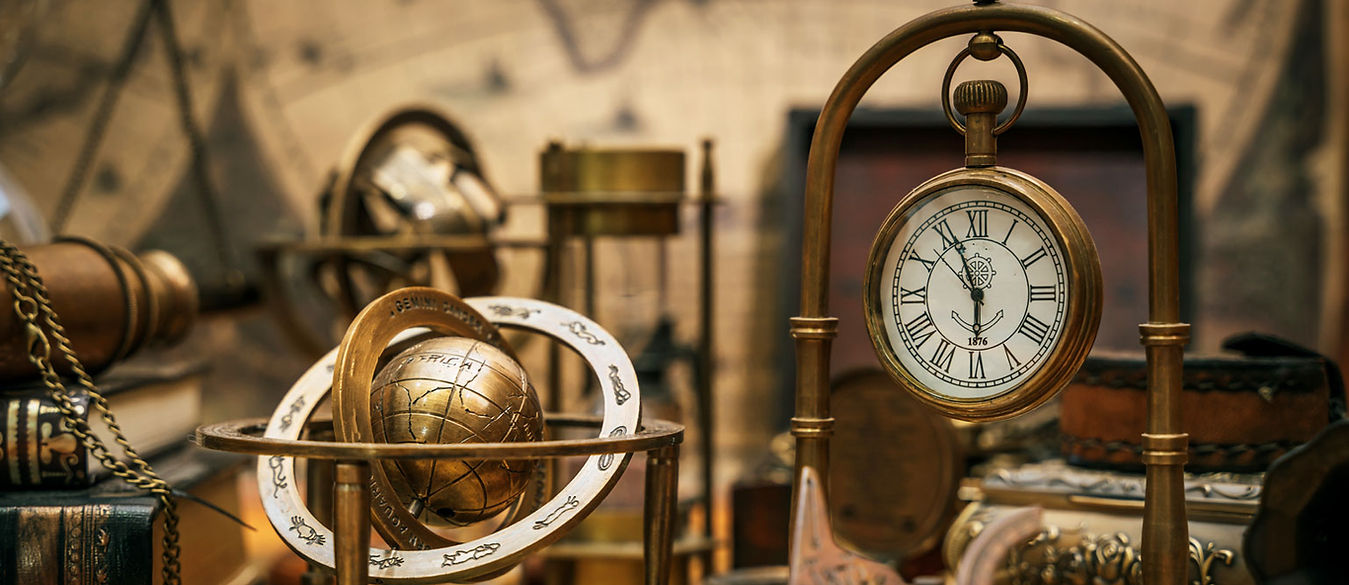 |
| Vintage Astronomy Instruments. Source: antiquariatoganesh.com |
A New Kind of Eclipse Souvenir
As eclipse tourism grows, many tourists are beginning to seek souvenirs that feel more permanent and meaningful. The ideal eclipse souvenir is no longer merely decorative. It should:- preserve memories,
- arouse curiosity,
- spark conversation,
- and reflect the wonder of celestial mechanics.
- functional instruments,
- collectible astronomical objects,
- educational artifacts,
- and symbolic representations of totality itself.
VOINOVA and the Idea of Eclipse Artifacts
Among the emerging names exploring this direction is the VOINOVA instrument, a project inspired by the legacy of analog astronomy and eclipse prediction instruments. Developed in 2019 by the Padepokan Albiruni, it has become a key instrument in eclipse education in Indonesia.Rather than approaching eclipses solely as spectacle, the project explores how astronomical events can be transformed into meaningful physical objects, blending historical inspiration, educational value, and collectible design.
 |
| VOINOVA Hispania by Ehsan Hidayat. Source: www.voinova.id |
The eclipse instruments he used were influenced by:
- the history of the volvelles,
- historical astronomical diagrams,
- the tradition of eclipse calculations,
- and the broader legacy of mechanical astronomy.
Why Unique Eclipse Souvenirs Matter for the Future
Every total solar eclipse eventually disappears in a matter of minutes. But the shadows pass, and the sky brightens. The crowds return to their homes.Yet the human desire to preserve the experience remains constant. Year after year, it grows ever more intense and the desire for more is greater. That's why eclipse souvenirs continue to flourish in each country hosting an observation. They range from paper ephemera and commemorative envelopes to collectible astronomical artifacts designed for future generations.
In many stories, these objects are more than just reminders of a rare celestial event. These objects are reminders of humanity's enduring fascination with the sky, a practice that stretches back thousands of years.
And perhaps that's what makes eclipse souvenirs truly meaningful: not their price, not their rarity, but their ability to keep the memory of a total eclipse alive long after its shadow has disappeared.


0Komentar