


The Antikythera Mechanism: The World's First Eclipse Computer

As human understanding of celestial motion evolved, so did the methods used to predict eclipses. What was once observed as a mysterious and unpredictable event gradually became a phenomenon that could be studied, calculated, and anticipated.
The ancient Babylonians were among the first to recognize recurring eclipse patterns through what is now known as the Saros cycle. This discovery marked a turning point—transforming eclipses from omens into predictable astronomical events.
Building upon this foundation, ancient Greek civilization advanced the field further by developing mechanical instruments capable of modeling celestial motion. These innovations laid the groundwork for one of the most remarkable technological achievements of the ancient world.
The Antikythera Mechanism: The First Known Astronomical Computer
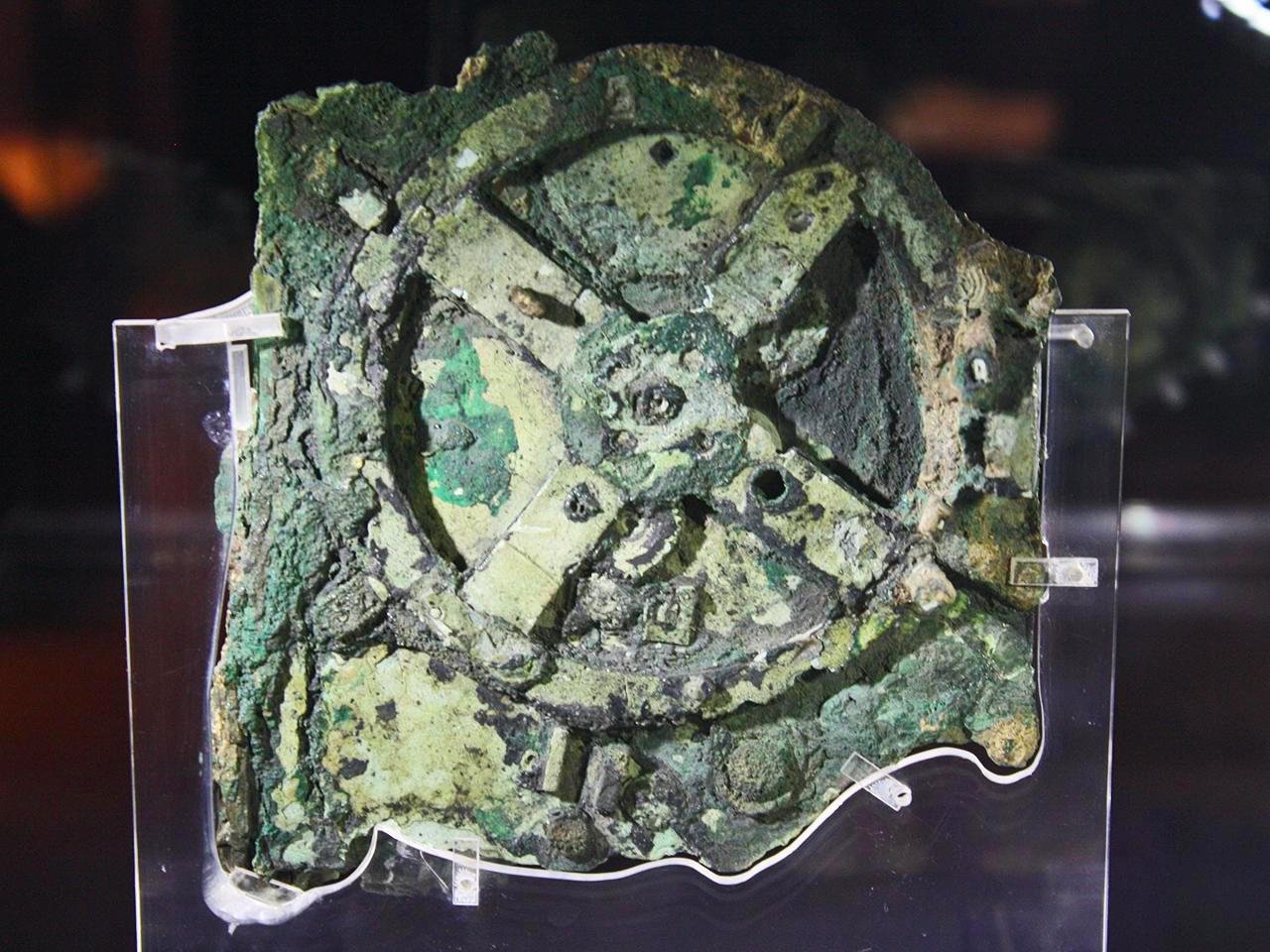
Around 205 BCE, long before the existence of modern computers, humanity had already developed an early form of computational technology.This device is known as the Antikythera Mechanism—a mechanical astronomical instrument designed to calculate and predict celestial phenomena, including solar and lunar eclipses.
Research cited by National Geographic Indonesia, based on studies conducted by James Evans (Professor of Physics at the University of Puget Sound) and Christian Carman (Professor of History at the National University of Quilmes), used elimination methods to estimate the earliest period of the mechanism’s use.
Their findings suggest that this device represents not only a scientific tool but also a profound leap in human understanding of the cosmos.
Discovery Beneath the Sea
One of the most extraordinary discoveries in the history of ancient astronomy originated from a shipwreck near the Greek island of Antikythera in the Aegean Sea.The ship, believed to have sunk in the first century BCE, was transporting valuable cargo—including bronze statues, jewelry, coins, and works of art—toward Roman territories. A violent storm ultimately destroyed the vessel, sending it to the seabed where it remained hidden for over two millennia.
In the early 20th century, sponge divers rediscovered the wreck. Among the recovered artifacts was a heavily corroded mechanical object—later identified as the Antikythera Mechanism.
Despite its deteriorated condition, researchers soon realized that this device was far more advanced than any other known artifact from its time. It is now widely regarded as one of the earliest precursors to modern computing.
Fragments of the mechanism are currently preserved at the National Archaeological Museum in Athens, while other parts are believed to remain undiscovered beneath the Aegean Sea.
How the Antikythera Mechanism Works
For decades after its discovery, scientists struggled to understand the true function of the Antikythera Mechanism. Its fragmented state and complex gear system made it one of archaeology’s greatest mysteries.It was not until the 1970s and 1990s, with the introduction of X-ray imaging, that researchers began to uncover its purpose. These scans revealed that the mechanism was designed to simulate the movements of celestial bodies—including the Sun, the Moon, and visible planets.
A major breakthrough came in 2006, when a research team led by Mike Edmunds from Cardiff University conducted high-resolution CT scans. These scans exposed intricate internal gear systems and previously hidden inscriptions, providing unprecedented insight into its functionality.
Structure and Operation
The Antikythera Mechanism is believed to have resembled a small mechanical clock housed in a wooden box, approximately 30 × 20 × 10 cm in size.- A rotating knob controlled the system
- Interconnected gears drove multiple pointers
- The front dial displayed:
- Position of the Sun
- Position of the Moon
- Positions of five visible planets (Mercury, Venus, Mars, Jupiter, Saturn)
- A small black-and-silver sphere indicated lunar phases
- The Saros cycle dial (used for eclipse prediction)
- Astronomical inscriptions detailing celestial events
Predicting Eclipses with the Saros Cycle
The mechanism predicted eclipses based on the 223-month lunar Saros cycle. This cycle allowed ancient astronomers to anticipate when solar and lunar eclipses would occur.The Saros dial featured:
- Spiral structures
- Glyphs representing eclipse types
- Index letters referencing detailed inscriptions
Two major arithmetic models have been proposed:
- A model explaining glyph distribution, index grouping, and inscription structure
- A model aligning recorded eclipse timing with the spiral Saros dial
Ongoing Research and Modern Technology
Research on the Antikythera Mechanism continues to evolve. In 2005, a large-scale investigation was conducted by a British-Greek research team in collaboration with the National Archaeological Museum in Athens and advanced technology companies.
Using cutting-edge micro-focus X-ray tomography and imaging systems developed by X-Tek Systems and Hewlett-Packard, researchers were able to generate detailed 3D reconstructions of the mechanism’s internal structure.
These scans revealed:
- Hidden inscriptions in ancient Greek
- Over 3,500 deciphered characters and symbols
- Categories of inscriptions:
- Astronomical
- Geographical
- Technical
Some inscriptions referenced:
- The Sun and Moon
- The zodiac cycle
- Metonic and Saros cycles
- Planetary stationary points (ΣΤHΡΙΓΜΟΣ)
A System Ahead of Its Time
The Antikythera Mechanism was not merely a device—it was a complete system.It likely included:
- Instruction manuals engraved on its surfaces
- Front and back panels with detailed explanations
- Seven pointers producing eight different readings
Its existence challenges long-held assumptions about the technological capabilities of ancient civilizations.
From Ancient Mechanism to Modern Interpretation
The Antikythera Mechanism stands as a testament to humanity’s enduring desire to understand the sky. It represents a moment when observation evolved into calculation—when the movement of celestial bodies could be translated into mechanical form.Though not perfectly accurate, its ability to predict eclipses and describe their characteristics—such as magnitude, direction, and timing—was an extraordinary achievement for its time.
More importantly, it reminds us that the pursuit of knowledge is not linear.
Centuries before modern computers, humans had already begun building tools to interpret the cosmos. Today, this legacy continues—not as replication, but as reinterpretation.
From ancient gears to modern instruments, the question remains the same: How do we understand the sky—and how do we preserve that understanding?
0Komentar